




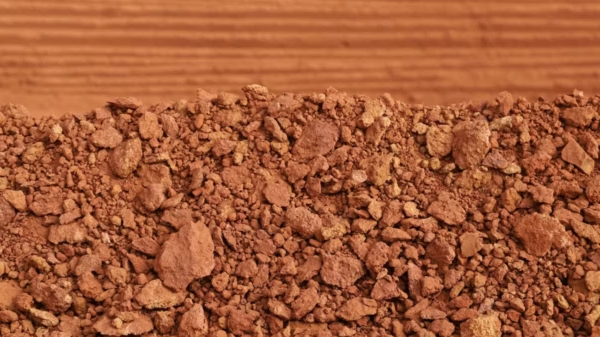











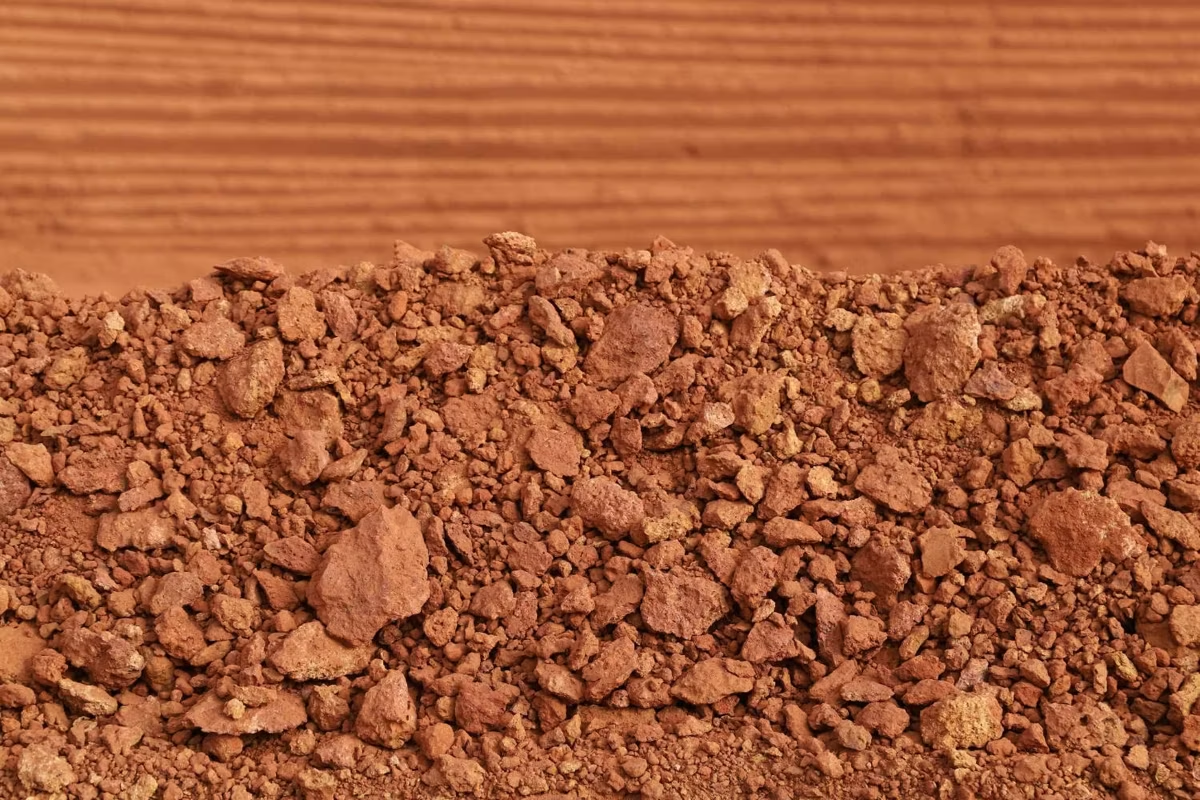
Mining giant Rio Tinto has reached an agreement to acquire the Aurukun bauxite project in Northern Queensland from a joint venture consisting of Glencore and Mitsubishi Development. Situated in Western Cape York, the project currently holds a mineral development license but has not yet secured a formal mining lease. According to statements released via Reuters, Glencore noted that while they invested significant resources into the design and advancement of the site, they believe Rio Tinto is better positioned to lead its future development due to the company’s extensive existing bauxite infrastructure in the surrounding region.
Despite the strategic fit for Rio Tinto’s regional network, the transition arrives amidst tension with local communities. Representatives of the Wik Waya people, the traditional owners of the land, have expressed frustration over a lack of consultation during previous stages of the project. Former Aurukun Mayor Keri Tamwoy criticized Glencore for failing to properly engage with those affected by the developments, noting that such decisions deeply impact employment, health, and education opportunities for her people. A spokesperson for Rio Tinto stated that the company intends to seek all necessary regulatory clearances and maintain active engagement with traditional owners moving forward.
This acquisition comes at a time when Rio Tinto is attempting to overhaul how it manages Indigenous partnerships across Australia. Coinciding with the announcement, the company reached an interim agreement with the Ngarlawangga Aboriginal Corporation to implement a co-management approach on Ngarlawangga Country. This updated framework replaces a 2011 agreement and mandates more transparent communication throughout every stage of a mine’s operational life cycle.
On a broader industrial level, securing the Aurukun assets helps stabilize raw material supplies for Rio Tinto’s alumina refineries in Gladstone. The move aligns with other sustainability efforts in Queensland, including a recent five year deal with SuperChar to introduce bio pellets produced from local bana grass into their energy mix. By shifting away from traditional fuels at its Yarwun and Queensland Alumina facilities, Rio Tinto expects to significantly lower its annual carbon emissions while maintaining strong overall production growth across its global portfolio.