















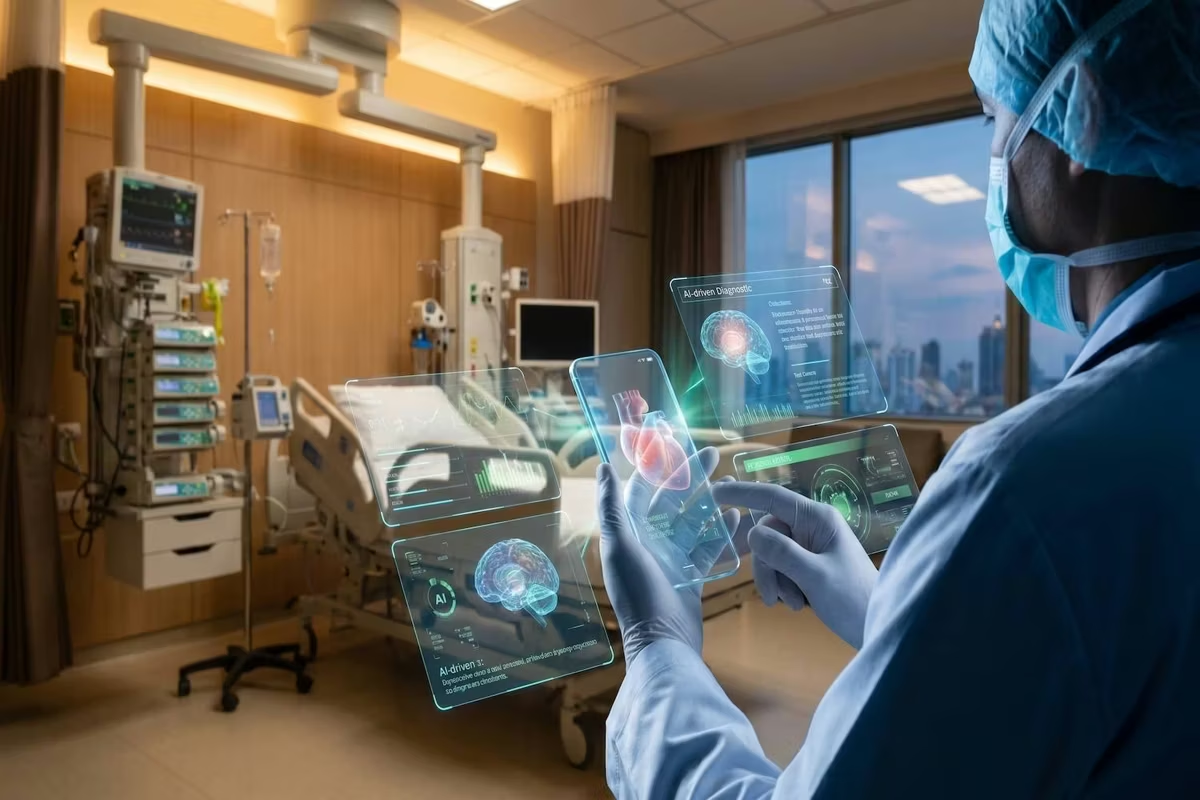
The intersection of venture capital and clinical medicine is currently witnessing a profound transformation as artificial intelligence moves from theoretical promise to bedside application. While the overarching goal is a total overhaul of healthcare, investors are finding themselves navigating two very different speeds of innovation. On one hand, there are high-risk moonshots involving humanoid surgical robotics and synthetic genomics that require massive capital and years of patience. On the other, there are leaner, high-margin software plays focusing on emergency diagnostics and clinical trial efficiency that offer more immediate financial returns.
One of the most promising frontiers lies in diagnostic and screening platforms that shift medical care from crisis management to early intervention. Tokyo-based bio-AI firm Craif is a prime example, utilizing urinary microRNA to detect pancreatic cancer far earlier than traditional blood tests allow. With a recent Series D funding round pushing their total capital to roughly 88 million dollars, the company is aggressively expanding into the United States to scale its research in San Diego. Similarly, AI is proving vital in acute settings where seconds matter. Recent data published in the American Journal of Neuroradiology highlighted the efficacy of platforms like RapidAI and Viz.ai in detecting large vessel occlusions during strokes, emphasizing that real-world clinical validation is now the gold standard for investor confidence over simple marketing specifications.
Beyond direct patient care, AI is radically altering the economics of drug development by removing costly bottlenecks. Research conducted by the Tufts Center for the Study of Drug Development suggests that AI monitoring agents can slash Phase 3 trial operating costs by millions of dollars while shaving months off development timelines. For big pharma companies managing complex oncology programs, these operational efficiencies can translate into staggering returns on investment. This pragmatic approach exists alongside deeper scientific gambles, such as Xanadu Quantum Technologies partnering with Canadian universities to use quantum computing for designing next-generation tumor treatments via photodynamic therapy.
As AI evolves beyond screens and into physical forms, we are entering what some call a super-cycle of embodied AI and robotics. The boundaries of surgery were pushed further this year when researchers at the University of California San Diego performed live laparoscopic procedures using teleoperated humanoid robots on nonprimate mammals. While still in preclinical stages, these five foot tall machines signal a future where robotic precision integrates seamlessly into hospital infrastructure. From quantum chemistry to autonomous surgeons, capital is betting heavily that the fusion of silicon and biology will not just improve healthcare but entirely redefine it.