
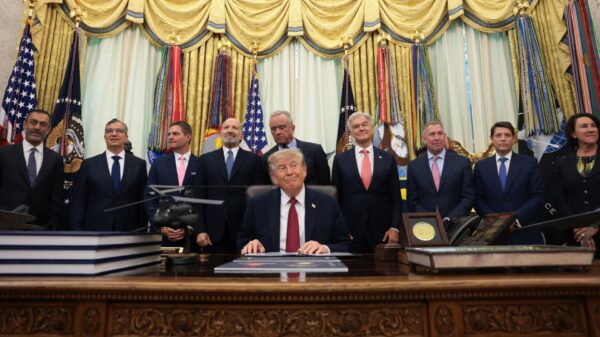









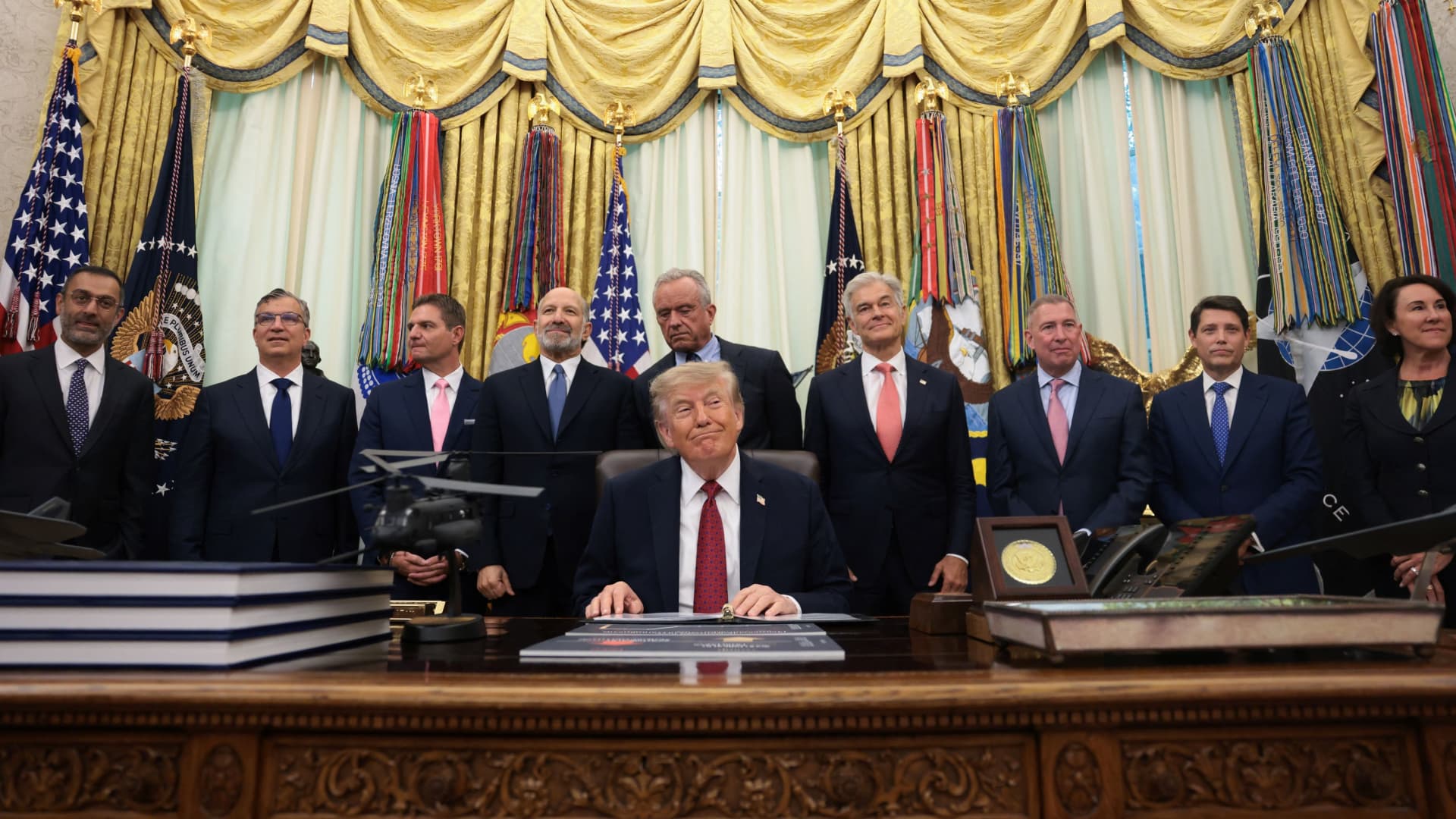
President Donald Trump announced on Monday that his administration has secured new voluntary drug pricing agreements with nine midsized pharmaceutical companies, further advancing his effort to tie American medication costs to lower international prices. The group of signees includes firms such as Teva Pharmaceuticals, Sun Pharma, and Astellas Pharma, among others. Under these terms, the companies will offer discounts on outpatient drugs to state Medicaid programs, specifically targeting treatments for rare and chronic conditions like liver disease, hemophilia and various cancers.
Beyond immediate price cuts, the deal carries a significant industrial component. The participating companies have pledged a collective investment of at least 19.6 billion dollars into U.S.-based manufacturing. Additionally, several firms including UCB and Teva have agreed to donate active pharmaceutical ingredients to the federal government’s strategic reserve to decrease national reliance on foreign supplies during emergencies. As an example of this commitment, UCB plans to contribute 163 tons of levetiracetam, a critical anticonvulsant used for seizure control.
This latest round brings the total number of companies agreeing to the administration’s most favored nation policy to twenty six, which the president claims covers about 90 percent of the domestic market. This strategy follows an executive order signed in May 2025 aimed at ending what Trump called global freeloading by insisting that U.S. patients not pay significantly more than customers in other wealthy nations. While some company shares dipped slightly following the announcement, many firms are shifting their business models toward direct-to-consumer sales via the TrumpRx portal to adapt to the changing landscape.
These moves come at a politically sensitive time ahead of the midterm elections as the White House seeks to highlight healthcare affordability. However, the transition has not been without friction. Industry groups like PhRMA have argued that linking prices to foreign markets is an inefficient way to lower costs and have pointed toward pharmacy benefit managers as the true culprits behind high prices. Meanwhile, major players like Novo Nordisk have noted that lower domestic prices are impacting their bottom lines and will require a surge in prescription volume to offset lost revenue.